
Unmasking the Truth Behind 'No Added Sugar' Labels: A Weight Loss Warrior's Guide
Embracing a holistic approach to health and wellness is vital to your long-term weight loss journey. A crucial part of this is understanding the 'no added sugar' label. Often found on products, these labels can be misleading as they may still contain significant amounts of naturally occurring sugar. Sugar is also hidden, and we wouldn't think to look. Being mindful of these hidden sugars is essential for making informed choices that support your weight loss goals.
Understanding "No Added Sugar" Labels
"No added sugar" means no additional sugars were introduced during processing or packaging. However, the product may contain natural sugars from ingredients like fruit juices, honey, or milk. These sugars can add up quickly, especially in flavoured yogurts, granola bars, and smoothies. Due to the high levels of naturally occurring sugars, many "no added sugar" products contain as much or more total sugar than their regular counterparts.
Reading Nutrition Labels Carefully
Examining the Nutrition Facts label and ingredients list is essential to understanding a product. Even products marketed as "no added sugar" may contain significant amounts of naturally occurring sugars, so checking the nutrition label is crucial. Scan the ingredients list for different names of sugars, such as high-fructose corn syrup, honey, molasses, and fruit juice concentrate. The ingredient lists are ordered from biggest to smallest, so if sugar is one of the top three ingredients, there is a lot of it. Check how many servings are in the package and what a single serving size is.
Many consume multiple servings without realizing it, leading to overconsumption of calories and sugar. Pay attention to total calories per serving, added sugars, and other nutrient sources like fats for weight loss. Choosing nutrient-dense foods within your calorie goals can support healthy weight management. The Australia New Zealand Food Standards Code states that foods that claim to be 'low sugar' cannot contain more than 2.5 g of sugar per 100 mL of liquid food or 5g per 100g of solid food.

Making Healthier Choices for Weight Loss
When losing weight, opt for whole, unprocessed foods like fresh fruits, vegetables, lean proteins, and whole grains. These foods naturally contain little to no added sugars and provide essential nutrients. For packaged foods, choose options with no added or minimal total sugar. Unsweetened versions of products like nut butter, yogurt, and plant-based milk are generally better choices.
Remember, while "no added sugar" claims can be helpful, they don't necessarily mean a product is low in calories, suitable for weight loss, or doesn't contain sugar; it's a marketing tactic. Always read labels carefully and consider the overall nutritional value of a food.
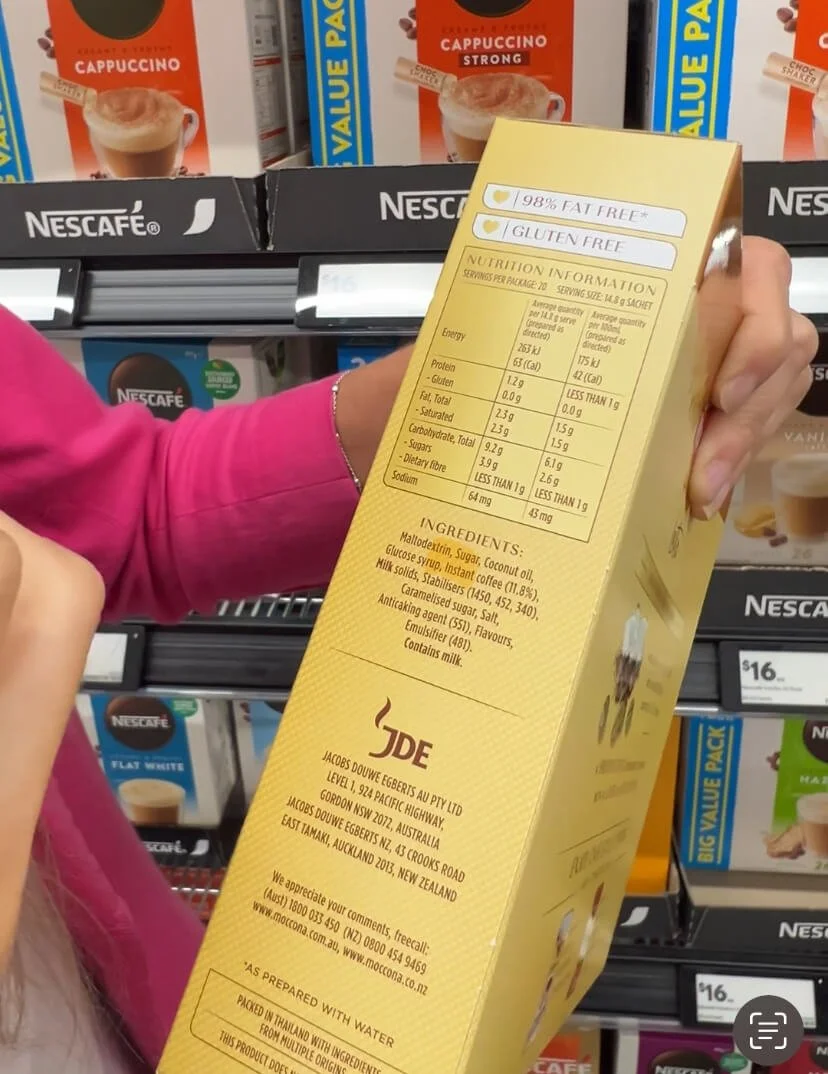
This coffee is only 11.8% instant coffee!
Scientific Evidence and Recommendations
Numerous studies have linked excessive sugar consumption to weight gain, obesity, and other health issues. The UK Scientific Advisory Committee on Nutrition (SACN) reviewed randomized controlled trials and confirmed the link between sugar-sweetened beverages and increased obesity in children and adolescents. Their report advised reducing sugar-sweetened beverage consumption. The World Health Organization recommends limiting added sugars to less than 10% of total daily calorie intake, with a further reduction to below 5% for additional health benefits.
In New Zealand, the Ministry of Health recommends reading nutrition labels carefully and choosing foods with little or no added sugars to maintain a healthy weight and reduce the risk of chronic disease. On average, we consume 37 teaspoons of sugar daily, but the ideal amount is only six teaspoons. That's because sugar is hidden in our foods, leading to an overindulgence we may not even realise is happening!
Another study published in the American Heart Association's journal Circulation in 2019 predicted that the new nutrition labels listing added sugars on packaged foods and drinks could prevent nearly a million cases of cardiovascular disease and 599,300 fewer cases of type 2 diabetes in the United States by 2037. The researchers estimated a reduction in net healthcare costs of more than $31 billion after policy costs were factored in.
A 2023 narrative review published in the International Journal of Environmental Research and Public Health highlighted the negative effects of excessive or prolonged sugar intake, particularly from fructose and high-fructose corn syrup. The current guidelines of limiting energy intake from added sugars to 5-10% have held up under scrutiny, particularly when considering the high disease burden and significant financial impacts of sugar-induced dental disease and other health issues. The review found strong evidence linking added sugars to obesity, metabolic disorders, diabetes, cardiovascular disease, cancer, depression, and other health issues.
By adopting a holistic approach to health and wellness, being mindful of hidden sugars in "no added sugar" products, and making informed choices based on nutrition labels, you can support your weight loss goals while nourishing your body with wholesome, nutrient-dense foods.
Awaken Your Inner Power with Bet's Holistic Coaching

Bet's program awakens your innate power to create a vibrant life filled with success and love. It focuses on building confidence and belief in your ability to transform. Learn to read labels, identify beneficial ingredients, and find a healthy rhythm that fits your lifestyle. Achieve lasting weight loss without restrictions or fads. Bet's Holistic Health Coaching empower you to reconnect with your fabulous self and embrace a healthier, more fulfilling life. Take the first step towards awakening your inner power. Contact Bet today and take charge of your wellness journey! Get your free introductory session now!